AI-Driven Web Scraping Is the Future of Real-Time Data Intelligence
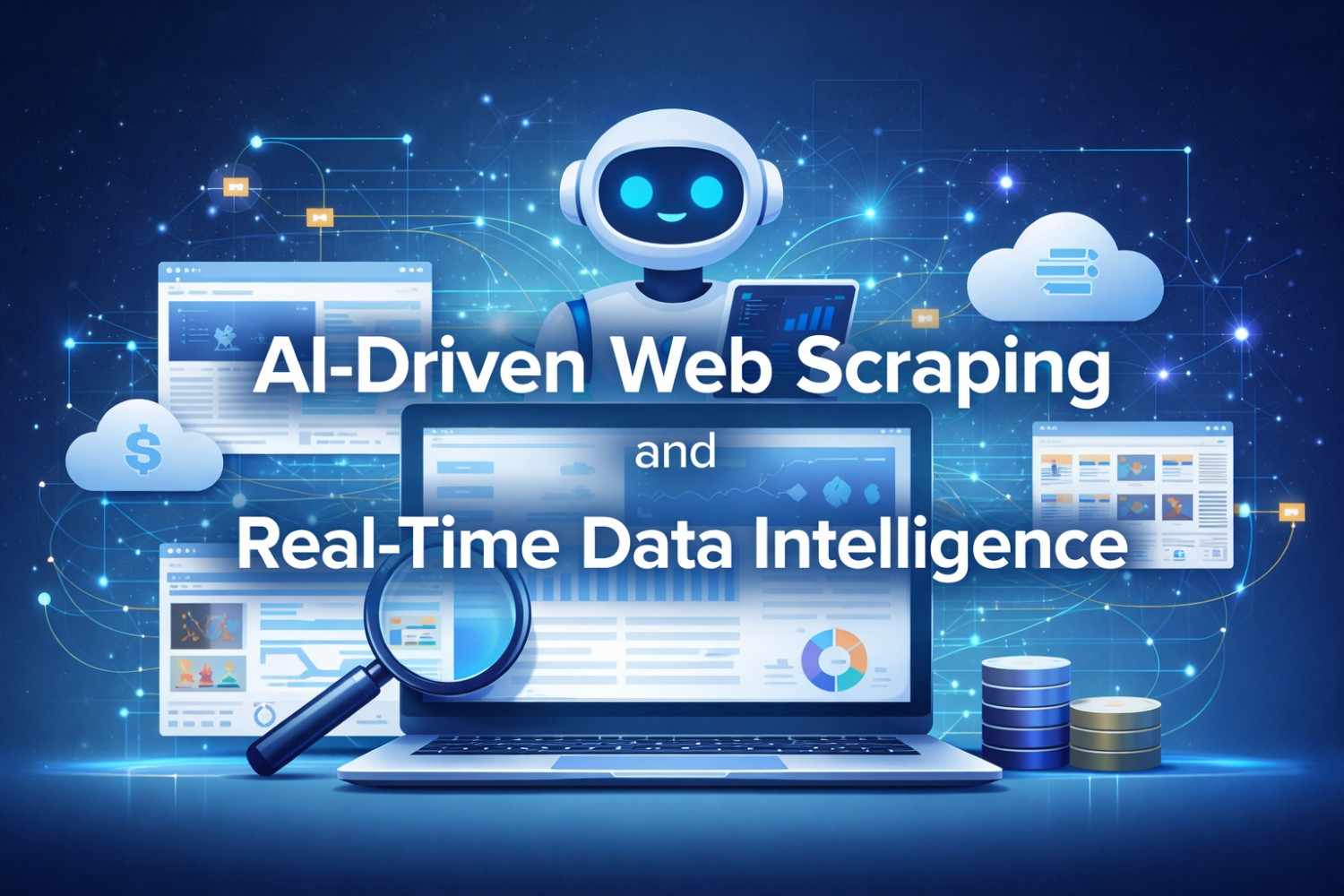
When the time felt right make a decision. Turns out, that was adorable. Today, data changes its mind faster than I change browser tabs. That realization hit me while watching competitors react to market shifts I hadn’t even seen yet. Enter AI-driven web scraping, which feels less like a tool and more like a survival instinct. It doesn’t wait. It listens, adapts, and nudges you forward before you even realize you’ve fallen behind.
The Old Way of Gathering Data and Why It Quietly Failed
The traditional approach to data collection was polite, methodical, and painfully slow. Manual scripts. Scheduled pulls. Reports that arrived just in time to be obsolete. I remember refreshing a dashboard like it owed me money—only to realize the numbers were already history. This method failed not with a bang, but a shrug. Markets moved. Users changed behavior. Data stayed frozen. Eventually, the gap between reality and reporting grew so wide it became impossible to ignore. That’s usually how change starts—quietly, then all at once.
What Makes AI-Driven Web Scraping Fundamentally Different
AI-driven web scraping doesn’t just collect data; it understands when data has changed its clothes. Unlike rigid rule-based systems, AI adapts to layout shifts, content changes, and new patterns without throwing a tantrum. I once watched a scraper break because a button moved three pixels to the left. AI doesn’t care about that. It learns structure, context, and intent. That difference is everything. It’s the jump from following instructions to making judgments—and yes, that’s slightly unsettling, but also incredibly useful.
Speed as a Competitive Advantage in Modern Markets
Speed used to be nice to have. Now it’s oxygen. When prices fluctuate hourly and sentiment shifts by the minute, waiting is the same as losing. AI-driven scraping delivers signals as they happen, not after they’ve settled into a spreadsheet. I’ve seen teams make decisions before competitors even noticed a change was underway. That’s the quiet power of Real-Time Data Intelligence—it doesn’t shout. It whispers early. And in business, hearing something first often matters more than hearing it loudest.
Accuracy, Context, and the End of Noisy Data
More data isn’t helpful if it’s wrong, irrelevant, or confusing—which describes a shocking amount of data I’ve worked with. AI changes that by filtering noise and adding context. It knows the difference between a price drop and a pricing error. Between a trend and a fluke. There’s a strange comfort in that. Fewer false alarms. Fewer “wait, that can’t be right” moments. The result is cleaner insight and fewer decisions made on gut instinct alone (though, let’s be honest, we still do that sometimes).
Scaling Data Collection Without Losing Your Sanity
Scaling used to mean hiring more people or writing more brittle scripts. Both options age poorly. AI-driven systems scale horizontally—across sites, formats, and languages—without demanding constant supervision. I’ve watched teams grow their data coverage tenfold without adding a single new headache. That’s not magic; it’s design. When systems can self-correct and adapt, humans get to focus on interpretation instead of maintenance. And that’s a trade I’ll take every time, preferably before my third cup of coffee.
Real-World Business Decisions Powered by Live Data
Live data turns strategy into something closer to reflex. Pricing adjusts automatically. Inventory decisions respond to demand signals. Marketing reacts while campaigns are still running. This is where Web Scraping Services quietly shine—feeding decision engines that don’t wait for weekly check-ins. I’ve seen organizations move from reactive to anticipatory, which feels like cheating until you realize it’s just better information. When decisions align closely with reality, outcomes tend to improve. Not always perfectly—but noticeably.
Ethical, Legal, and Responsible Scraping Considerations
Any powerful tool invites responsibility. AI-driven scraping is no exception. Respecting site policies, privacy rules, and legal boundaries isn’t optional—it’s foundational. The smartest implementations bake ethics into the system itself. Rate limits. Compliance checks. Transparent use cases. I’ve learned that cutting corners here never pays off long-term. Trust, once lost, is expensive to rebuild. Doing things the right way may feel slower at first, but it creates something rare in tech: sustainability without regret.
Why This Shift Is Happening Now
This shift isn’t sudden—it’s overdue. AI matured. Infrastructure caught up. Data demands exploded. All the pieces finally aligned. I like to think of it as gravity finally winning an argument. Businesses didn’t suddenly want real-time insight; they always did. Now it’s simply possible at scale. Timing matters. So does readiness. Those who adapt early don’t just gain an advantage—they redefine what “normal” looks like for everyone else.
The Human Element in an AI-Driven Data World
Despite the automation, humans still matter—arguably more than before. AI handles extraction and pattern recognition. Humans handle judgment, ethics, and meaning. I’ve found that the best outcomes come when people trust the system but question the conclusions. That balance is subtle. Too much trust leads to complacency. Too little leads to paralysis. AI doesn’t replace decision-makers; it sharpens them. And honestly, that’s the most encouraging part of all this.
Conclusion
AI-driven web scraping feels less like a trend and more like an inevitability. Once you experience decisions grounded in live, adaptive data, it’s hard to go back. The future of data intelligence isn’t louder dashboards or bigger reports—it’s quieter confidence. The kind that comes from knowing your information reflects the world as it is, not as it was. And in a landscape that refuses to stand still, that might be the most valuable advantage of all.
FAQs
What is AI-driven web scraping and how does it work?
It combines machine learning with data extraction to adaptively collect and interpret web data as it changes.
How is it different from traditional scraping tools?
AI systems adjust automatically to site changes, while traditional tools often break and require manual fixes.
Is real-time data always necessary?
Not always—but in fast-moving markets, delayed data can be worse than no data at all.
Is AI scraping legal to use?
Yes, when done responsibly and in compliance with applicable laws and site policies.
Which industries benefit most?
Ecommerce, finance, travel, recruitment, and media tend to see immediate value.
Do companies need technical teams to use it?
Not necessarily. Many platforms abstract complexity behind user-friendly interfaces.













Post Comment